

AI Personal Trainer: What It Does Well, Where It Fails (2026)
A balanced look at AI personal trainers: where AI saves time, where it can hurt people, and how a human-in-the-loop model keeps it safe.
About 9 min read
| QUICK ANSWER |
|---|
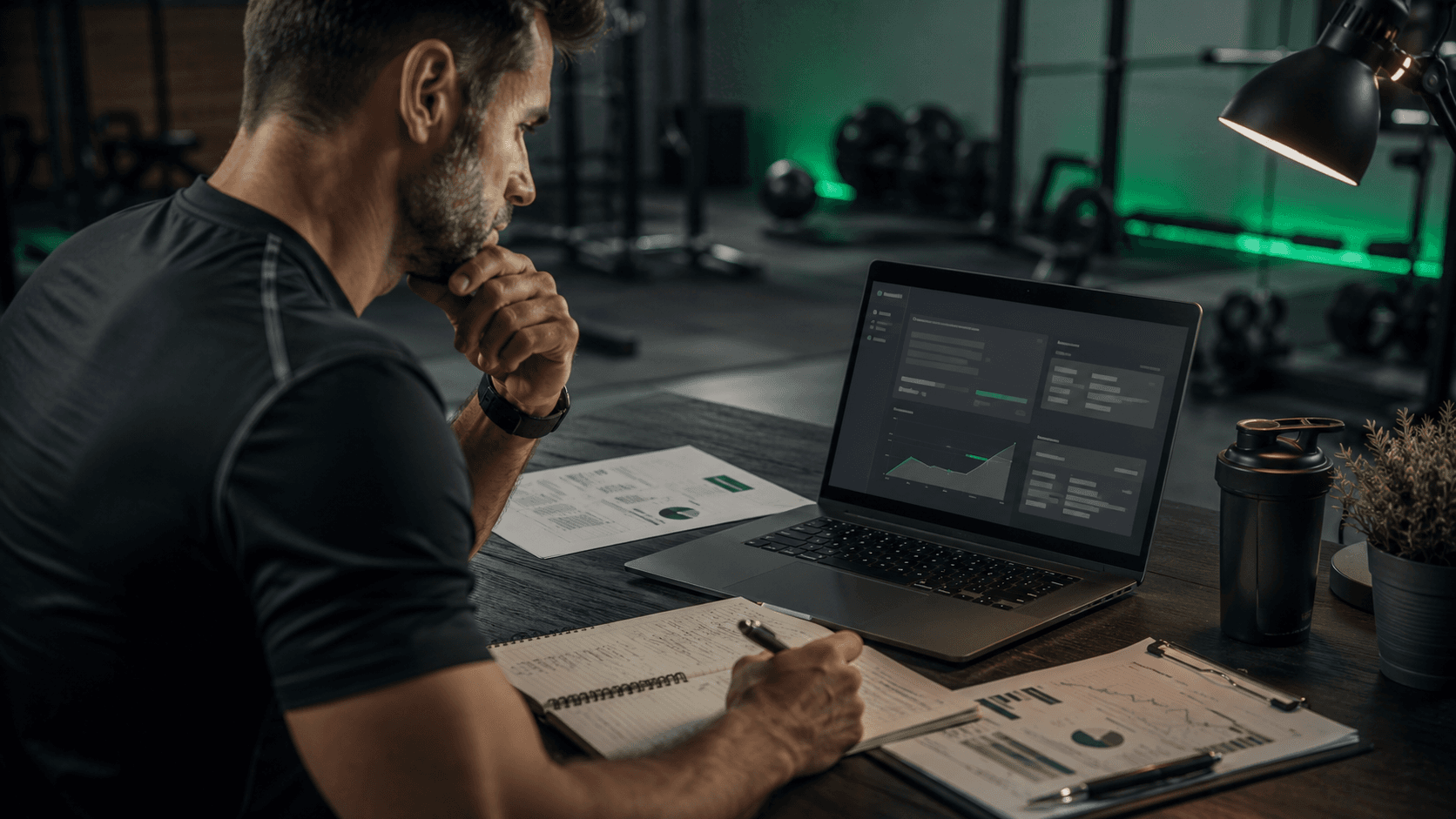
| An AI personal trainer is software that uses artificial intelligence to draft workouts, adjust them from your logs and answer questions. It is good at speed, structure and admin, and weak at judging pain, injury history, eating-disorder risk or context it cannot see. The safest model is human-in-the-loop: the AI drafts, a qualified professional reviews and approves, and you give feedback that improves the next version. |
Searching for an AI personal trainer usually means one of two things: you want a cheap, always-available coach in your pocket, or you are a coach wondering whether AI can take work off your plate. Both are fair. The honest answer is that AI is useful in a narrow set of tasks and risky when it is trusted to make decisions about bodies it cannot see.
What an AI personal trainer does well
- Drafting: turning a goal, schedule and equipment list into a first workout structure in seconds.
- Variation: suggesting exercise substitutes when equipment or time changes.
- Summarizing: condensing weeks of logs, comments and check-ins so a coach spots patterns faster.
- Admin: rewriting instructions in plainer language, preparing check-in questions, drafting messages.
- Flagging: pointing out missed sessions or sudden drops in performance for a human to look at.
These share a trait: the output is a draft someone can verify. Time saved on drafting and paperwork is real, as long as the tool is connected to your data. If you have to copy and paste between systems or fix mistakes constantly, the saving disappears.
Where AI falls short
| Decision | Risk if automated | Who should own it |
|---|---|---|
| Is it safe for this person to train? | Misses medical context | Screening, then a doctor or qualified professional |
| Exercise selection and technique | Cannot see pain or form | Coach observing or reviewing video |
| Load, volume and progression | Too much, too soon, or too little | Coach using trend data |
| Calorie targets and diet | Outside scope; risky for some people | Registered dietitian or qualified nutrition professional |
| Reacting to one data point | Treats noise as signal | Coach reading the trend |
A plausible answer can still be wrong. Language models can produce confident text that is inaccurate or unsafe, which is why the person who approves a plan must be able to explain why they accept, change or reject each part of it.
Injury, eating disorders and other risks
Before any new program, standard practice is to screen for contraindications. The PAR-Q+ is a widely used readiness questionnaire; a consumer app that skips screening, or ignores your answers, is a red flag. Beyond that:
- Injury and pain: an AI cannot assess a painful movement. Pain, dizziness, chest discomfort or unusual breathlessness means stop and see a clinician.
- Eating disorders: automated calorie and weight targets can reinforce restriction and compulsive exercise in vulnerable people. Anyone with a history of disordered eating needs a human clinician, not a calorie algorithm.
- Young people, pregnancy and medical conditions: these need individual professional input.
- Overconfidence: polished plans can create false trust. The format looks authoritative even when the content is generic.
Data privacy and regulation
Body measurements, photos, training logs and injury history are personal data and can be sensitive. Before using any AI tool, find out what it collects, which providers process it, how long it is kept and how you can delete it. Avoid pasting full medical records into general-purpose public chatbots.
In the United States, HIPAA generally covers health plans, providers and their business associates, not most consumer fitness apps. The FTC fills part of that gap: its Health Breach Notification Rule applies to many health apps that are not covered by HIPAA. In the European Union, the GDPR applies to personal data, and the AI Act (Regulation 2024/1689) adds obligations that depend on how risky an AI system's use is, applied in phases since 2024. Some application dates were under revision in 2026, so check the current timetable. Whether a specific coaching feature falls into a given risk category needs case-by-case legal analysis; this article does not give one.
AI app for clients vs AI assistant for coaches
| Client-facing AI app | Coach-facing AI assistant | |
|---|---|---|
| Who sees the output | You, directly | The professional first |
| Who decides | The software | The professional |
| Context available | What you type or sync | Client history, notes, check-ins |
| Main risk | Unreviewed advice | Over-trusting a draft |
| Best for | Low-risk general fitness | Individualized coaching at scale |
The human-in-the-loop model
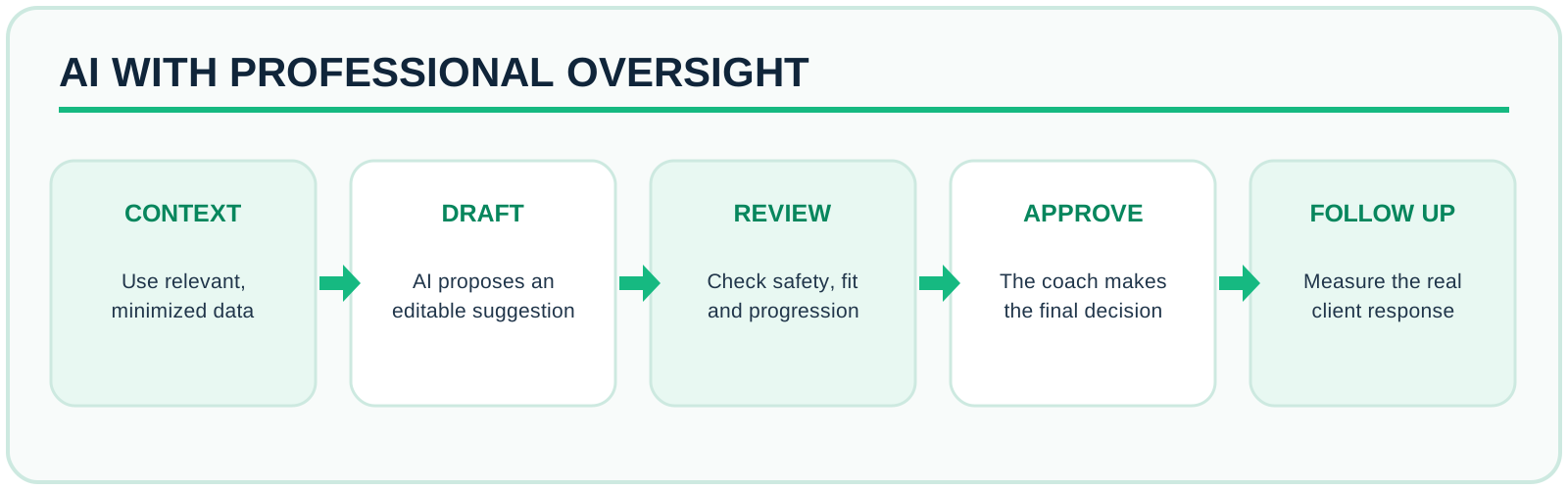
Rules decide, AI drafts, humans approve. A good professional workflow works like this:
- Define the task and what the AI must not do.
- Provide only the data that is needed and authorized.
- Ask for a draft with its assumptions visible, including what information is missing.
- Review exercises, volume, intensity, rest and progression against what you know about the client.
- Edit, then approve before anything is assigned or sent.
- Measure the response and use real data to correct the next version.
This is how the assistant in FitConnect Pro is designed: the AI prepares a draft training or diet plan, and the coach or nutrition professional reviews, edits and approves it before the client sees it. The professional stays responsible for the plan. See the personal trainer software overview for more on how the pieces fit.
How to evaluate an AI fitness tool
| Criterion | Test question |
|---|---|
| Control | Can I edit everything before it reaches a client? |
| Traceability | Do I see the data and assumptions it used? |
| Safety | Does it avoid diagnoses and guarantees, and flag missing information? |
| Privacy | Does it explain data handling and providers? |
| Consistency | Does it respect limits and sensible progression? |
| Cost | What does the plan include and what are the limits? |
Test it with incomplete data and conflicting constraints. A good tool admits what it does not know instead of always producing a confident answer.
Common mistakes
- Assigning the first output without reading it.
- Sharing more personal data than the task needs.
- Using vague prompts and blaming the model for vague results.
- Generating isolated weeks with no progression logic.
- Letting AI cross into medical or clinical nutrition advice.
- Telling clients the system replaces the coach.
Frequently asked questions
Can ChatGPT be used as a personal trainer?
It can draft a reasonable-looking routine and explain exercises, but it cannot see your movement, does not know your injury history unless you tell it, and can state wrong or unsafe things with confidence. Treat its output as a draft to check, ideally with a qualified professional.
How much does an AI personal trainer cost?
Pricing changes often and varies by app, from free tiers to monthly or annual subscriptions, so check the current store listing or pricing page. Cost is rarely the main question; what matters is whether a qualified person is behind the plan.
Is an AI personal trainer safe?
It can be for healthy adults with simple goals, if you screen yourself first, start conservatively and stop if something hurts. It is not appropriate as the only guide for injuries, pregnancy, medical conditions, adolescents or anyone with a history of disordered eating.
Will AI replace personal trainers?
It is more likely to change the job than remove it. AI is strong at drafting and admin; coaching still relies on observation, motivation, accountability and professional judgment, which software does not replace.
What is the difference between an AI app for clients and an AI assistant for coaches?
A client-facing AI app talks directly to you and decides what you do. A coach-facing assistant prepares drafts, summaries or suggestions that the professional reviews, edits and approves before they reach the client.
Does AI keep my fitness data private?
Not automatically. Check what the provider collects, who it shares data with, how long it keeps it and whether you can delete it. Health and body data can be sensitive.
Bottom line
AI earns its place when it speeds up bounded tasks and leaves decisions to a qualified person. If you are a coach, look for a tool that keeps you in control; you can see how FitConnect Pro approaches it on the pricing page. If you are a client, treat any AI plan as a starting draft and involve a professional whenever health is in question.
Sources and editorial note
- Regulation (EU) 2024/1689, Artificial Intelligence Act.
- FTC: Health Breach Notification Rule guidance.
- PAR-Q+ (Physical Activity Readiness Questionnaire).
This article is general information, not medical or legal advice. Review it when regulation or product behavior changes.