

Nutrition Coaching Software: How Dietitians and Nutritionists Should Choose in 2026
A dated, practical comparison of nutrition coaching software: pricing as of October 2026, a selection checklist, privacy notes for HIPAA and GDPR, and how to coordinate with trainers.
Reading time: about 9 min
| QUICK ANSWER |
|---|
| Nutrition coaching software covers client records, meal plans, food logs, messaging, scheduling and payments. As of October 2026 you can start free (Practice Better: 3 clients) or pay about $20 to $50 a month for a small caseload. Check the food database, the client app, data export and your HIPAA or GDPR obligations before you commit. |
What nutrition coaching software does
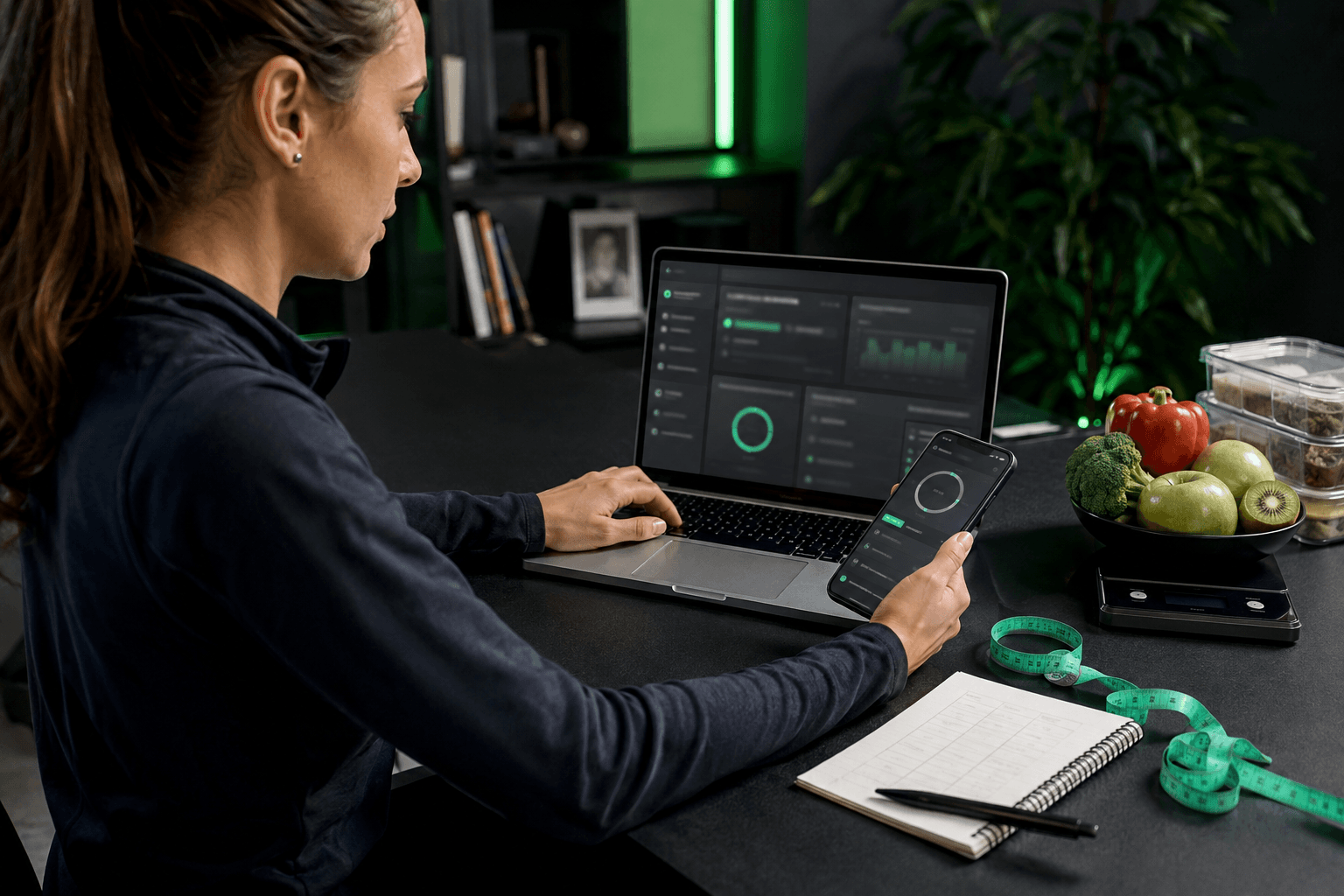
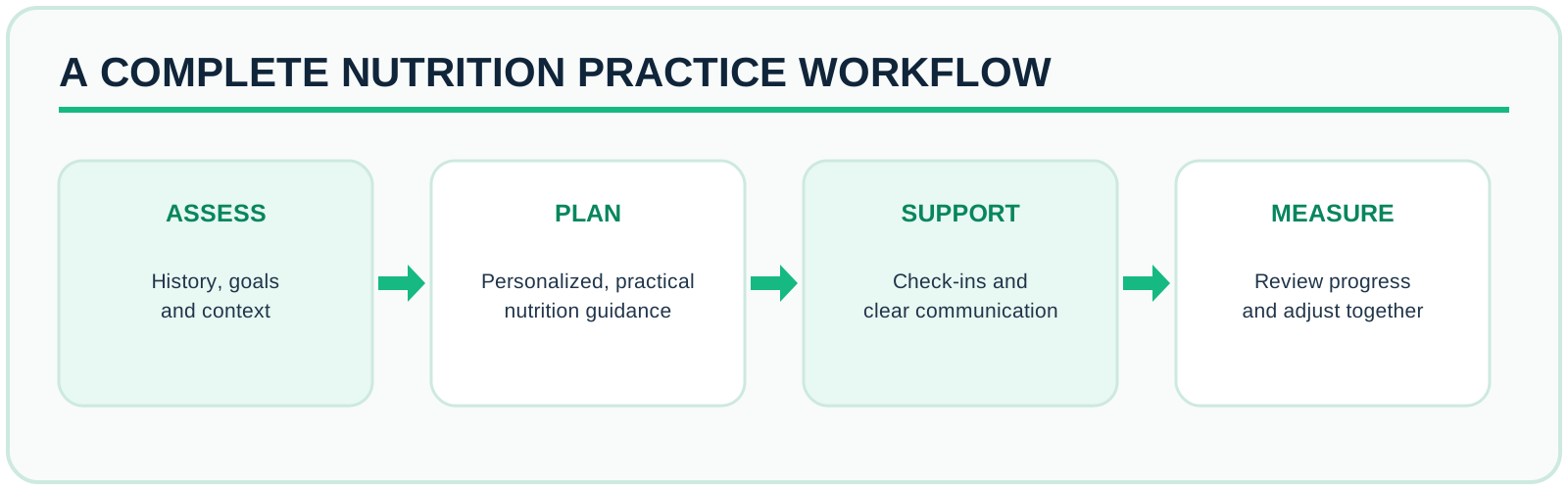
Most practices begin with PDFs, spreadsheets, email and a calendar. Dietitian software replaces that with one record per client: intake and goals, allergies, measurements, the current plan, what the client actually ate, and every message. The result is less retyping and a clearer picture when you adjust a plan.
Nutritionist software compared: pricing as of October 2026
Figures come from each vendor's public pricing page in October 2026 and change often, sometimes with regional currency differences. Use them to shortlist and verify before you buy.
| Platform | Pricing (USD, monthly billing) | Free option | Best known for |
|---|---|---|---|
| Nutrium | Paid plans with a limited-client option and an unlimited-client option; the page shows several price points, so confirm before buying. | 14-day trial | Dietitian-focused meal planning with a food database and a client app. See our Nutrium comparison below. |
| Practice Better | Starter $35 (10 clients), Professional $69 (300), Plus $99 (unlimited), Team $155; annual billing is lower. | Free Sprout plan (3 clients); 14-day trials | Practice management: scheduling, charting, telehealth and billing; lists HIPAA, PIPEDA and GDPR support. |
| Healthie | Core $19 (10 clients), Essentials $49 (250), Plus $129 (unlimited), Group from $149. | 14-day trial | US-oriented clinical workflows; states HIPAA and SOC 2 compliance and offers a BAA. |
| That Clean Life | Starter $30 (10 client shares), Plus $60 monthly; yearly billing is lower. | Not stated | Meal-plan creation and sharing; integrates with practice management tools. |
| FitConnect Pro | Starts free; client limits and AI access grow by plan. See the pricing page. | Yes | Training and diet plans, check-ins and chat in one client record, with an AI assistant that drafts for you to review. |
Evolution Nutrition and other regional tools are also used by practitioners; we could not verify their current public pricing at the time of writing, so we have left them out of the table. If you are weighing Nutrium specifically, read our FitConnect vs Nutrium comparison.
Meal planning software for dietitians: what to check
- Food database: coverage for your country and the foods your clients eat, source of the data, and the ability to add custom foods and recipes.
- Nutrient totals: calories, macronutrients and the micronutrients you actually use, with daily and weekly views.
- Templates and swaps: reusable plans, exchange lists, substitutions and shopping lists.
- Restrictions: allergens, intolerances, religious or cultural patterns and medical flags kept visible on the plan.
- Client app: easy food logging, photos, reminders, and a plan that opens on a phone in seconds.
- Edits without data loss: change a plan mid-week and keep the client's logged history.
Selection checklist for nutrition coaching software
- Define your model: clinical practice, online coaching or both. This decides whether you need charting and insurance tools or mainly plans and check-ins.
- Run one real client case end to end in the trial: intake, plan, food log review, adjustment, invoice.
- Price your target caseload (10, 30, 100 clients), not just the entry plan, and include add-ons such as telehealth or branded apps.
- Check data export and what happens to records if you cancel.
- Read the privacy terms: where data is stored, who processes it, and whether the vendor signs the agreements you need.
- Test the client experience on a phone with someone who is not tech-savvy.
- Confirm support hours and language, and look for a public changelog.
Client data: HIPAA and GDPR in plain terms
This is general information, not legal advice. In the United States, the HIPAA Privacy and Security Rules apply to covered entities, such as health care providers who transmit health information electronically in connection with standard transactions like insurance billing, and to their business associates. If you are covered, any vendor that handles protected health information for you should sign a business associate agreement. A coach outside that scope may not be covered, but should still protect client data and follow state law and platform terms.
In the EU and UK, health data is a special category under GDPR Article 9. You need a lawful basis plus an explicit condition (often explicit consent or provision of health care), a data processing agreement with each vendor, appropriate security measures and a way to honor access and deletion requests. Ask every vendor where data is hosted and whether it is transferred outside the EU or UK. A vendor stating that it is HIPAA or GDPR compliant is a starting point, not a substitute for your own compliance.
Coordinating with a personal trainer
Clients who train and change their diet at the same time are better served when the two professionals see the same picture: calorie target, training load, recovery, and check-ins. Look for separate roles and permissions so the dietitian sees nutrition data and the trainer sees training data, with sharing only where the client agrees. FitConnect Pro supports a client with more than one professional, each with their own plan and notes; see software for trainers and nutritionists and our online nutritionist guide.
Where FitConnect Pro fits
FitConnect Pro offers diet plans, check-ins, chat, client files and payments through Stripe, alongside training plans, so a nutrition professional can work next to a trainer on the same client. Its AI assistant prepares drafts that you review and edit before the client sees anything. It is not a clinical charting or insurance billing system, so a practice that needs those features should shortlist tools built for them.
Frequently asked questions
What is the best software for dietitians?
It depends on whether you run a clinical practice (documentation, insurance, telehealth) or a coaching business (plans, check-ins, habits). Practice Better and Healthie lean towards practice management; Nutrium and That Clean Life lean towards meal planning. Trial two with a real client case.
Is there free nutritionist software?
Some platforms have free tiers with small caps. As of October 2026, Practice Better lists a free Sprout plan for up to 3 clients. Check limits on clients, features and data export.
What should meal planning software for dietitians include?
A reliable food database for your country, editable templates, macro and micronutrient totals, allergy and intolerance flags, exchange lists or swaps, and a client view that is easy to follow on a phone.
Do I need HIPAA-compliant software?
In the US, HIPAA applies to covered entities (for example providers who bill insurers electronically) and their business associates. If you are covered, your vendor should sign a business associate agreement. If you are not covered, privacy duties still apply under state and other federal law, so ask your own adviser.
Does GDPR apply to nutrition client data?
If you serve clients in the EU or UK, yes. Health data is a special category under GDPR Article 9, so you need a lawful basis and an explicit condition, a processor agreement with the vendor (Article 28) and appropriate security (Article 32).
Can I use AI to create meal plans?
AI can help draft and summarize, but the qualified professional must review the plan, because clinical judgment and responsibility stay with you. Never send an unreviewed plan to a client with a medical condition.
Can a nutritionist and a personal trainer share one client?
Yes, if the platform has separate roles and permissions so each professional sees only the data they need. Otherwise use shared notes the client has agreed to.
Conclusion
Choose nutrition coaching software by testing one real client case, pricing your target caseload, and reading the privacy terms against the law that applies to you. Keep the professional in charge of every plan, whatever the tool offers.
Sources and editorial note
- Vendor pricing pages, October 2026: Nutrium, Practice Better, Healthie, That Clean Life.
- HHS: HIPAA for professionals.
- EU: Regulation (EU) 2016/679 (GDPR).
FitConnect Pro is one of the options in this category, so this guide has a conflict of interest. Prices are as of October 2026 from public pages and may differ by region, billing period and promotion. This is not legal or medical advice.