

Online Personal Trainer: How It Works, Cost and How to Choose (2026)
How an online personal trainer actually works, what you get for the money in the US and UK, how to pick a coach and when a hybrid of online and in-person is the better deal.
Reading time: about 11 min
| QUICK ANSWER |
|---|
| An online personal trainer is a qualified coach who plans your training, tracks your results and adjusts the programme remotely. As of 2026, expect about $100-$300 a month in the US for ongoing coaching; UK plans start from about £20 and rise with support. Choose a certified coach with a clear process for feedback, check-ins and reply times. |
What is an online personal trainer?
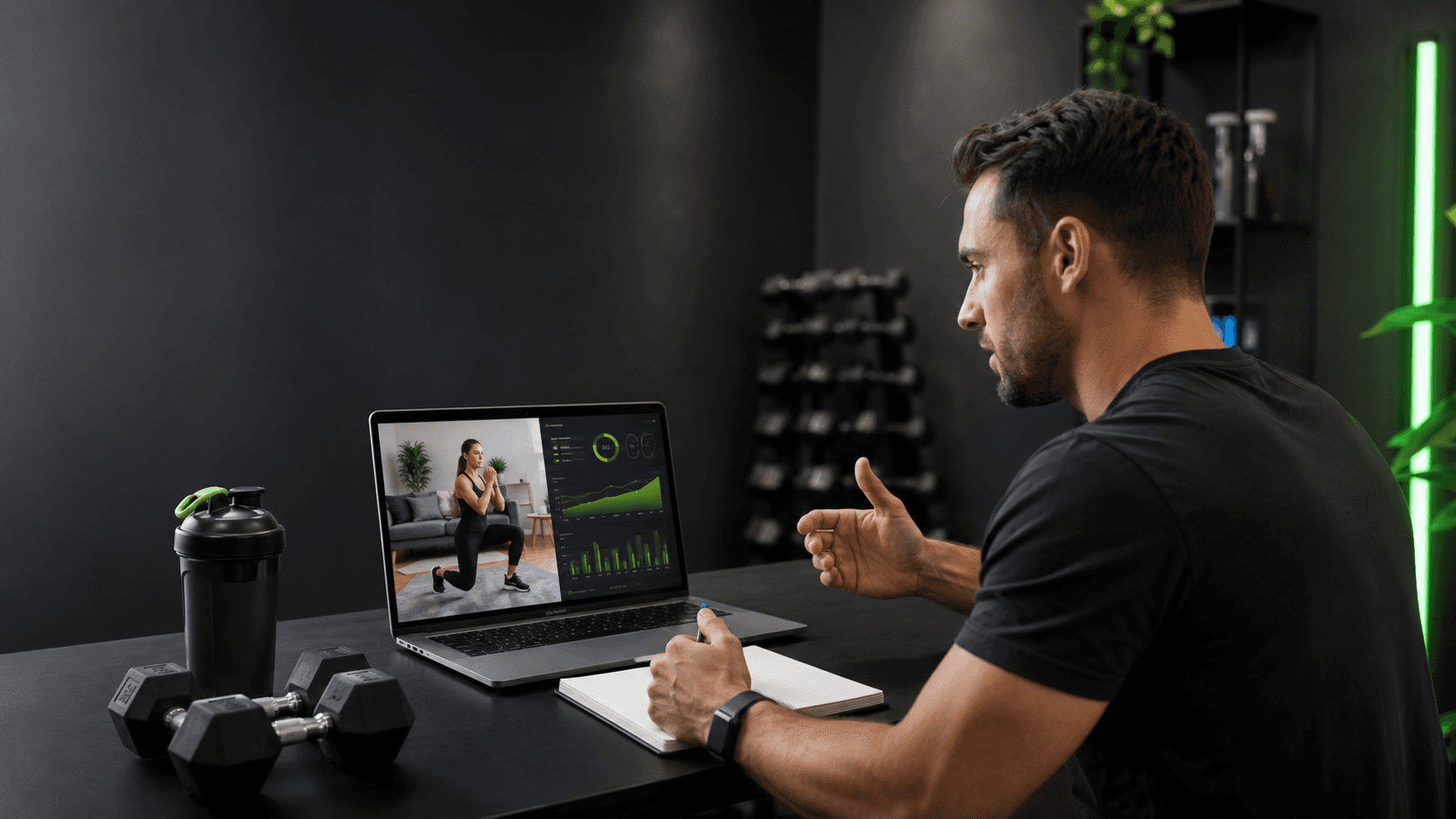
An online personal trainer designs and supervises your training without being in the room. You train at your own gym or at home; the coach builds the programme, reviews what you logged, answers questions and changes the plan as you progress. The terms online personal trainer, online fitness coach and online coaching are used almost interchangeably. What matters is whether you buy a service (an ongoing relationship with a professional) or a product (a fixed PDF or app subscription).
In the US the job sits within the broader fitness trainer occupation, which the Bureau of Labor Statistics reports at a median of $47,160 a year (May 2025) and expects to grow 7% from 2025 to 2035. Personal trainers usually need a certification before working with clients, which is your first quality filter.
How online personal training works
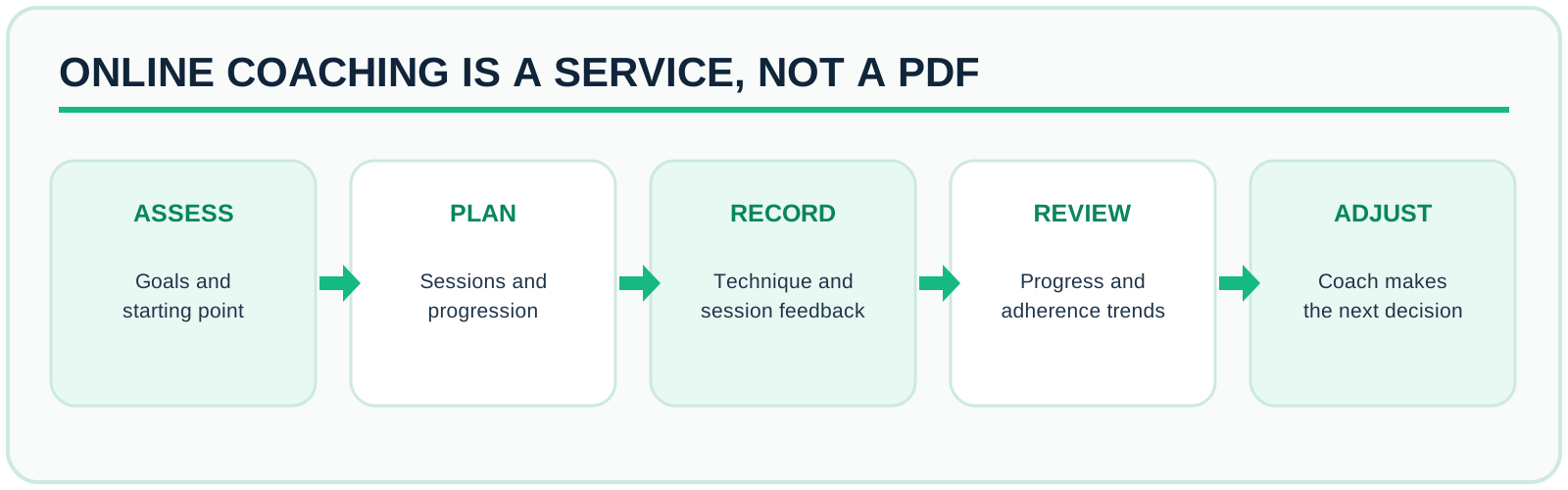
- Intake and assessment. You share your goal, training history, injuries, schedule and equipment, often with a health questionnaire such as the PAR-Q+. Some coaches also ask for photos or a short movement video.
- Programme design. The coach writes sessions with exercises, sets, reps, rest and progression for your level and equipment.
- Logging. You record weights, reps and how sessions felt in an app, spreadsheet or platform. Without data, remote coaching is guesswork.
- Check-ins and review. Weekly or fortnightly, you send weight, measurements, photos, sleep or adherence notes. The coach reviews trends and technique videos.
- Adjustment. The plan changes based on what happened: more volume, a deload, an exercise swap for a sore shoulder, a different schedule.
What is included in online coaching?
Packages differ a lot, so compare the deliverables, not the price alone. A complete service normally includes the items below; cheaper tiers drop the ones lower down.
- A personalised programme, updated on a set schedule (for example every 4 weeks).
- A way to log workouts and see exercise demonstrations.
- Regular check-ins with written or video feedback.
- Direct messaging with a stated response time (for example within one working day).
- Technique review: you upload clips of key lifts and the coach comments.
- Optional live video sessions for form checks, planning or motivation.
- Basic nutrition guidance within the coach's scope. Individual meal plans for medical conditions belong to a registered dietitian or nutritionist.
How much does an online personal trainer cost?
There is no official price survey for online coaching, so published ranges come from coaching-industry guides and marketplace listings. As of 2026 they broadly agree, and we have cross-checked them against FitBudd's US pricing breakdown and Airtasker's UK guide. Treat the table as ballpark figures and always ask for a written quote.
| Format | US (USD) | UK (GBP) |
|---|---|---|
| Programme only (plan, little contact) | $50-$150 / month | from about £20 / month (Airtasker) |
| Standard coaching (plan, check-ins, messaging) | $100-$300 / month | no reliable published range; get quotes |
| Premium or high-touch coaching | $200-$400+ / month | no reliable published range; get quotes |
| Live one-to-one video session | $25-$75 / session | no reliable published range; get quotes |
| Fitness app subscription (no human coach) | $5-$30 / month | varies by app |
The UK has fewer published online-coaching figures than the US, so we only quote what a source states. For in-person comparisons and what drives the price, see our guide to how much a personal trainer costs.
Online vs in-person personal training
| Online | In person | |
|---|---|---|
| Typical cost | Lower per month, no travel | Higher per session, often $60-$150 or £30-£65+ |
| Technique correction | Via video review; slower and less precise | Instant, hands-on cueing |
| Accountability | Check-ins and messages; you must show up alone | A person waiting for you at a set time |
| Flexibility | Train any time or place | Fixed slots at one location |
| Programming depth | Same expertise; volume of data is higher | Same expertise; less data between sessions |
| Best for | Self-starters, busy schedules, travel | Beginners, rehab-style needs, low confidence |
Online fitness coach, app or AI: what is the difference?
A fitness app gives you content: workout libraries, timers and generic plans, usually for a low monthly fee. An online fitness coach gives you decisions: someone who looks at your data, notices that your squat stalled or your sleep collapsed, and changes the plan. AI tools sit in between. They can draft a programme quickly, but they do not know your injury history unless you tell them, and they cannot take responsibility for you. The most useful setup is software that handles logging and drafting while a qualified human reviews and decides.
Is a hybrid approach better?
Often, yes. A common structure is one or two in-person sessions a month to coach technique and test progress, with online programming and check-ins in between. You pay for hands-on time only where it adds the most value, which keeps total cost well below weekly in-person training. If you are new to lifting, start with a few in-person sessions (or a good video onboarding) before going fully remote.
How to choose an online personal trainer
- Verify credentials. In the US, look for a CPT from an NCCA-accredited organisation (NASM, ACE, ACSM or NSCA) and CPR/AED. In the UK, ask for a Level 3 personal training qualification, check the CIMSPA directory, and check their insurance.
- Ask what a normal week looks like: how often you check in, how fast they reply, what happens when you miss sessions.
- Look for a process, not a transformation gallery. Ask how they assess, progress and adjust.
- Check relevant experience: beginners, postnatal, older adults, a sport, or injury history.
- Request a sample programme or trial month, and read the cancellation terms.
- Agree the scope on nutrition. A trainer may give general healthy-eating guidance; for medical conditions, ask for a registered dietitian.
Questions to ask on a first call
- What will my first two weeks look like?
- How do I log workouts, and how often will you review them?
- What is your reply time on messages, and what happens when you are away?
- How do you handle injuries, missed weeks or a plateau?
- What exactly happens if I want to pause or cancel?
Red flags to avoid
- Identical programmes sent to every client with no intake questions.
- Guaranteed results or a fixed number of pounds lost in a fixed time.
- No stated certification or insurance, or a refusal to share it.
- Extreme calorie targets, banned food groups or supplements pushed as part of the plan.
- Long non-cancellable contracts paid upfront with no trial period.
- No answer on how and when you can reach the coach.
Who online coaching suits (and who it does not)
Online coaching suits people who can follow a plan on their own, have access to equipment, train at odd hours or travel. It suits you less if you have never lifted, need constant cueing, have a medical condition that needs supervision or find motivation only when someone is physically present. In those cases start in person or choose a hybrid.
If you are a trainer going online
Spreadsheets and chat apps stop working at around a dozen clients. FitConnect Pro lets coaches build training plans, run check-ins, chat with clients, keep client files and take payments through Stripe, with AI drafts that you review before the client sees anything. See the personal trainer software guide and our walkthrough on how to start a personal training business. To browse professionals, visit the marketplace.
This article is general information, not medical advice. If you have a medical condition, injury, are pregnant or have not exercised for a long time, speak to a doctor before starting a programme.
Frequently asked questions
How much does an online personal trainer cost?
Industry price guides (as of 2026) put monthly online coaching at about $100-$300 in the US, with basic programming-only tiers from $50-$150 and premium high-touch coaching reaching $200-$400+. In the UK there is no reliable published survey; one consumer price guide says online plans start from about £20 a month, and prices rise with the level of support. Live one-to-one video sessions are typically $25-$75 in the US. These figures come from coaching-industry guides, not an official survey, so compare real quotes.
Is online personal training worth it?
It is worth it if you will actually follow the plan and you value expert programming, progression and accountability at a lower price than in-person sessions. Research on remote coaching is still growing, so judge a coach by process (assessment, logged data, regular reviews) rather than promises of results.
Is $300 a month a lot for a personal trainer?
For online coaching, $300 a month sits at the upper-middle end of typical ranges and should include a custom plan, regular check-ins and direct messaging. For in-person training, $300 a month usually buys only about 4 to 6 sessions. Judge it by what is included and how responsive the coach is.
What is the difference between an online fitness coach and a fitness app?
An app delivers content (workouts, timers, generic plans) and usually costs $5-$30 a month. A coach adds a person who assesses you, writes or adapts your plan, reviews your data and answers questions. Some services combine both, with software doing the logging and a human making the decisions.
Can an online personal trainer help with weight loss or muscle gain?
Yes, for general fitness, fat loss and muscle gain, the coaching levers are the same as in person: a progressive plan, consistency and, where the coach is qualified, sensible nutrition guidance. Anyone with a medical condition, injury or pregnancy should get medical clearance first, and nutrition prescriptions for medical conditions belong to a registered dietitian.
How do I know an online trainer is qualified?
In the US, look for a certification from an NCCA-accredited body such as NASM, ACE, ACSM or NSCA, plus CPR/AED. In the UK, look for a Level 3 personal training qualification, public liability and professional indemnity insurance, check the CIMSPA directory, and ask to see their insurance. Qualifications are verified with the awarding body, not by a social media bio.
Do I need a gym for online personal training?
No. A good coach can programme for a full gym, a home setup with dumbbells or bands, or bodyweight only. Tell the coach what equipment and time you have at the start so the plan fits your life.